The Chinese CHI 2022 Conference, organized by the International Chinese Association of Computer-Human Interaction (ICACHI), will be held in Guangzhou from November 5 to 6, 2022.
The fiber optic interactive design work LIGHTracer by Professor Bai Ziqian's team from the School of System Design and Intelligent Manufacturing (SDIM) has been selected for the 2022 Chinese CHI Conference Art Gallery.
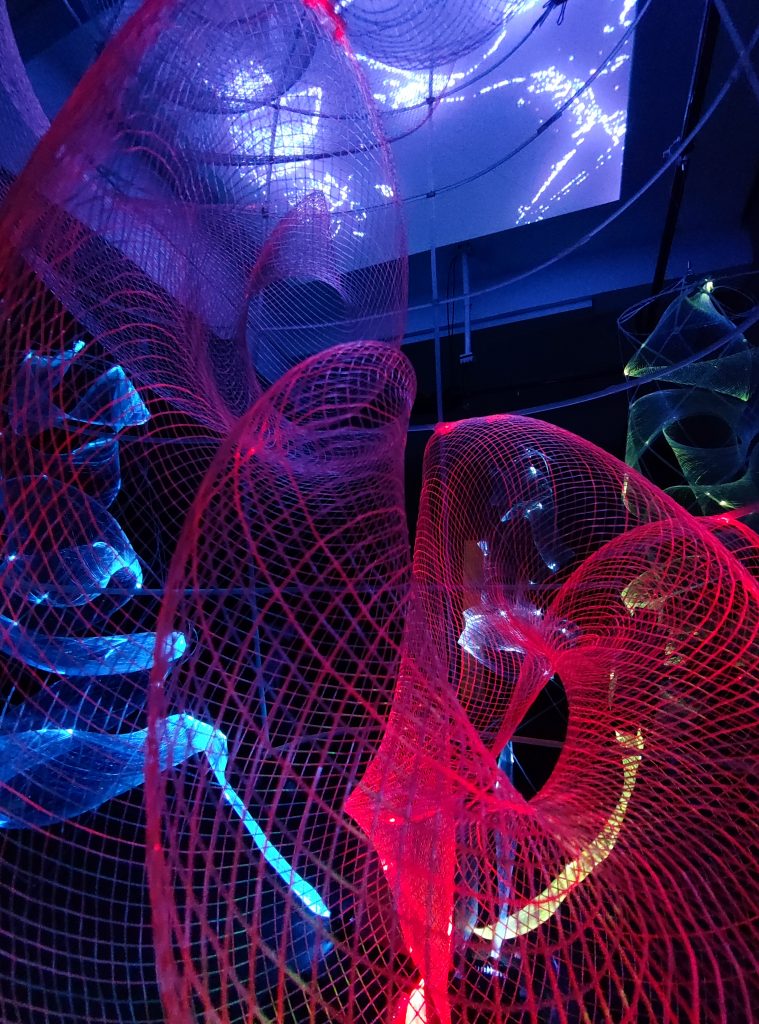
Inspired by the relationship between light and shadow, material and urban space, LIGHTracer explores the possibilities of tangible interactive art design.
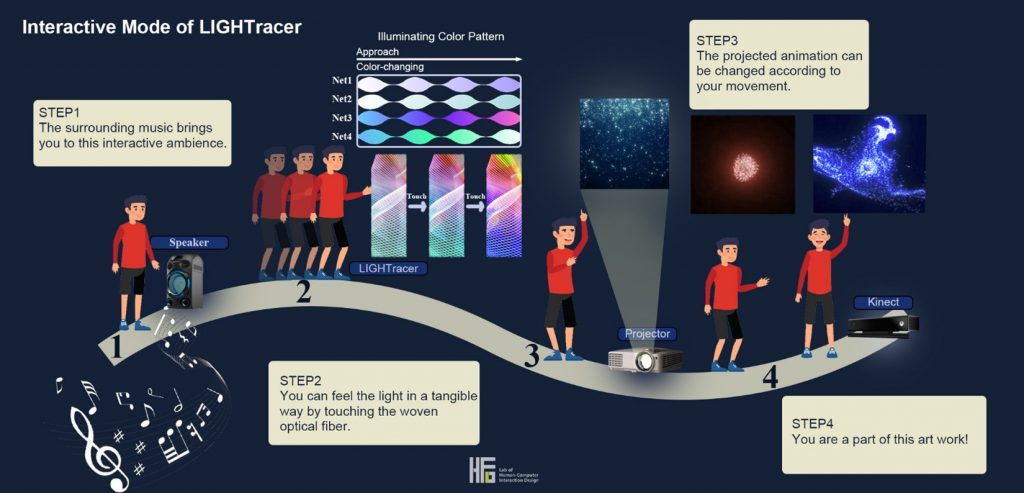
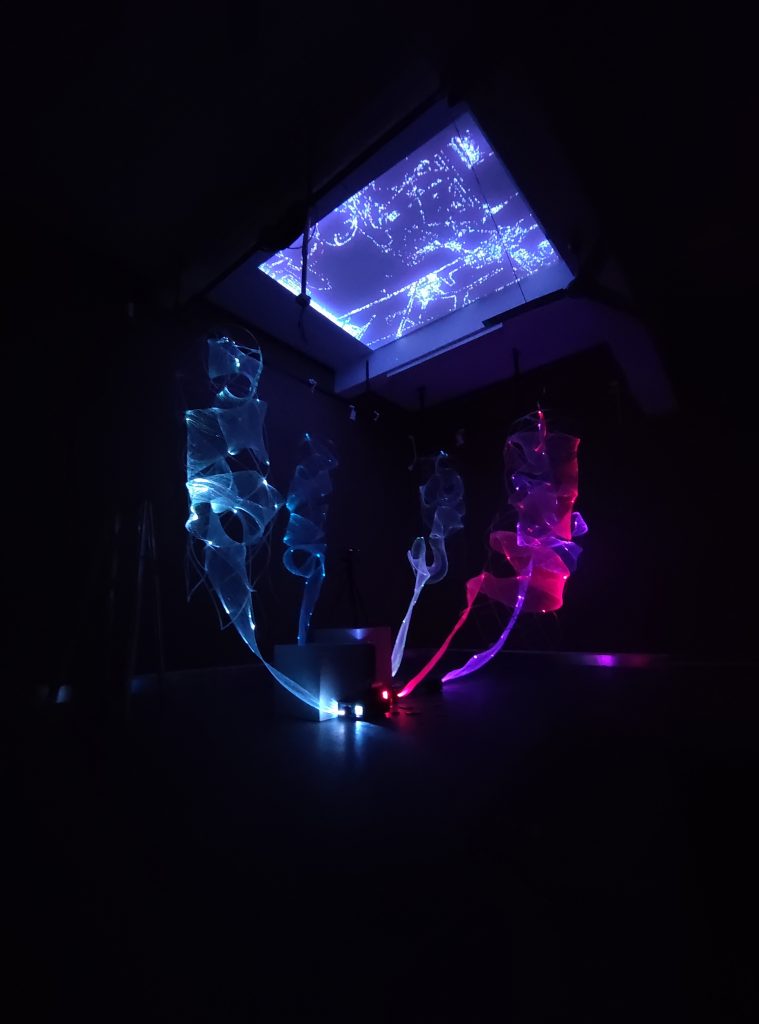
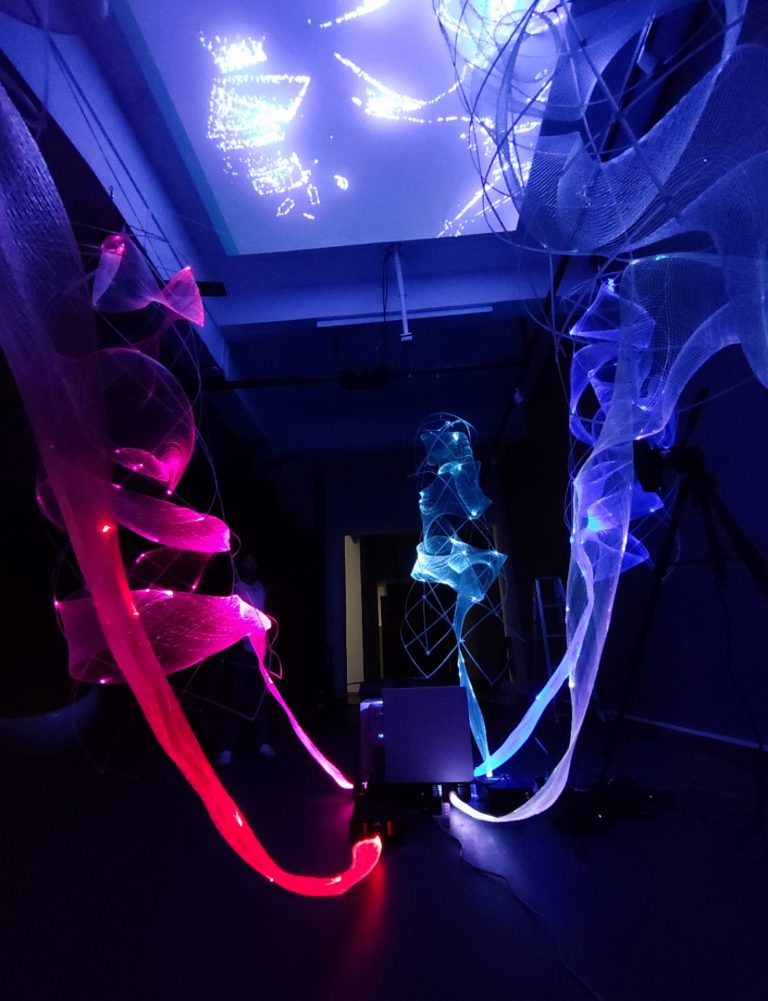
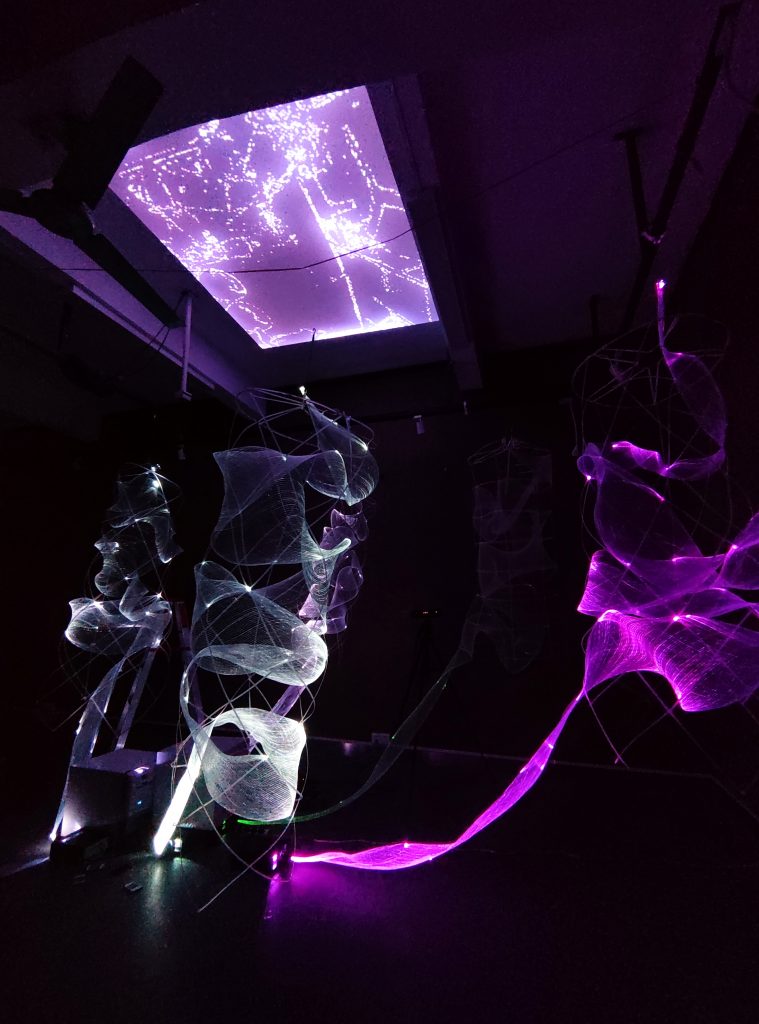
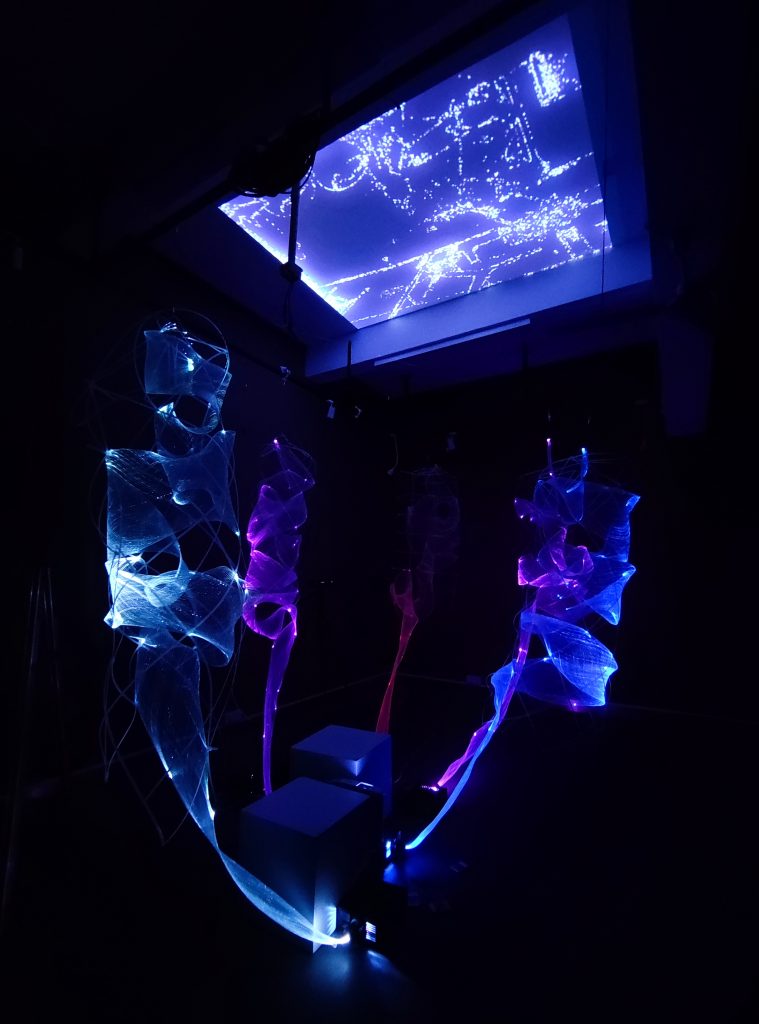
Under the guidance of Professor Bai Ziqian, the SDIM student team employed a special weaving technique to create large, flexible fiber-optic networks, introducing organic curves into the rigid urban landscape. The installation also integrates Kinect technology for real-time interaction and projection.
LIGHTracer
Advisor:Prof. Bai Ziqian (Assistant Professor, SDIM)
Main Designers:Wang Yimin (Research Assistant, SDIM), Guo Jiawei (SDIM Master’s Student, Class of 2022)
Participants:Liu Honglei (SDIM Nanshan Phase I), Li Mingshuo (SDIM Nanshan Phase II), Han Yujie (SDIM Nanshan Phase II)
A city is a cluster of life, a massive organism brimming with rhythmic symbols. Every life form within the city has its unique rhythm, and their existence brings warmth and depth to the urban environment. However, the forest-like cities are gradually consuming the beauty and simplicity of nature. The fast-paced lifestyle often leaves no room for reflection or emotional connection. While development is inevitable, art installations can awaken awareness of the city’s pulse and the traces of life it holds.
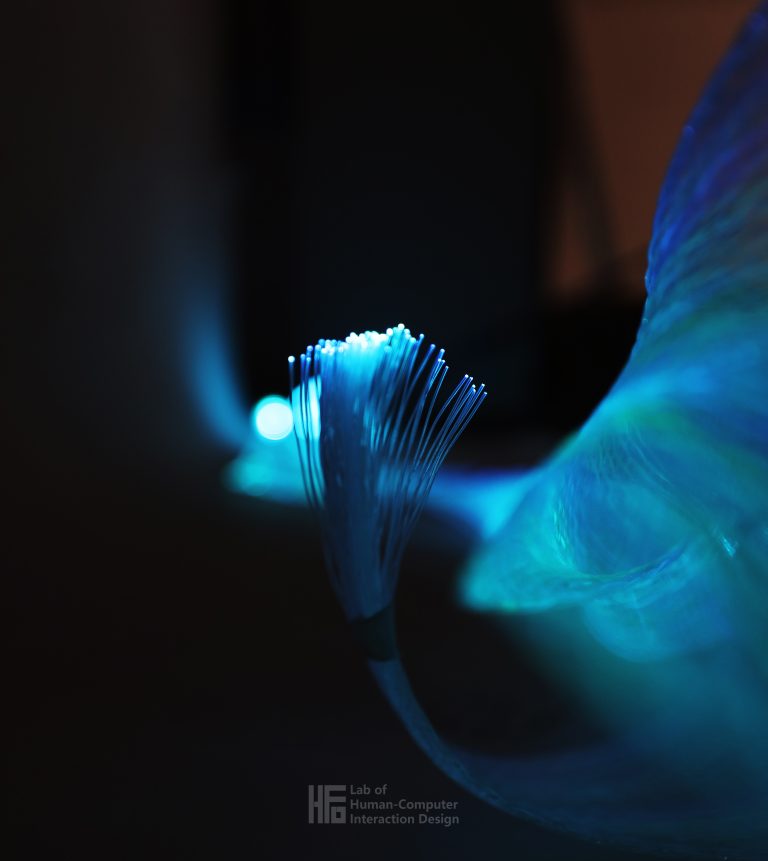
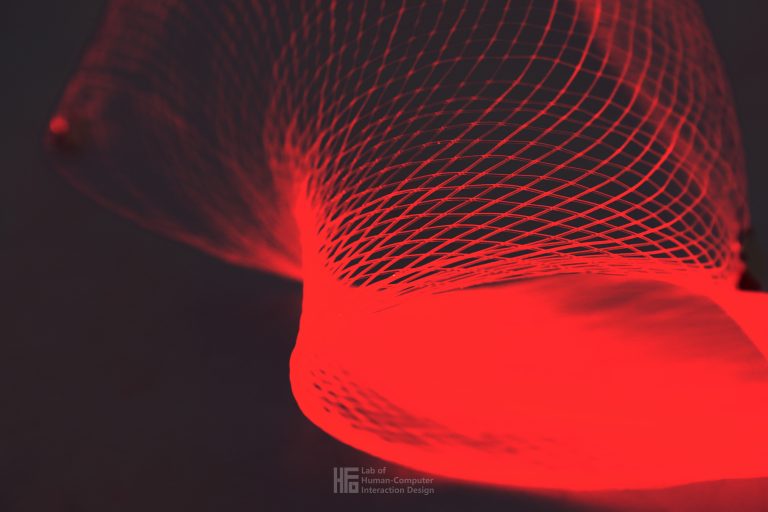
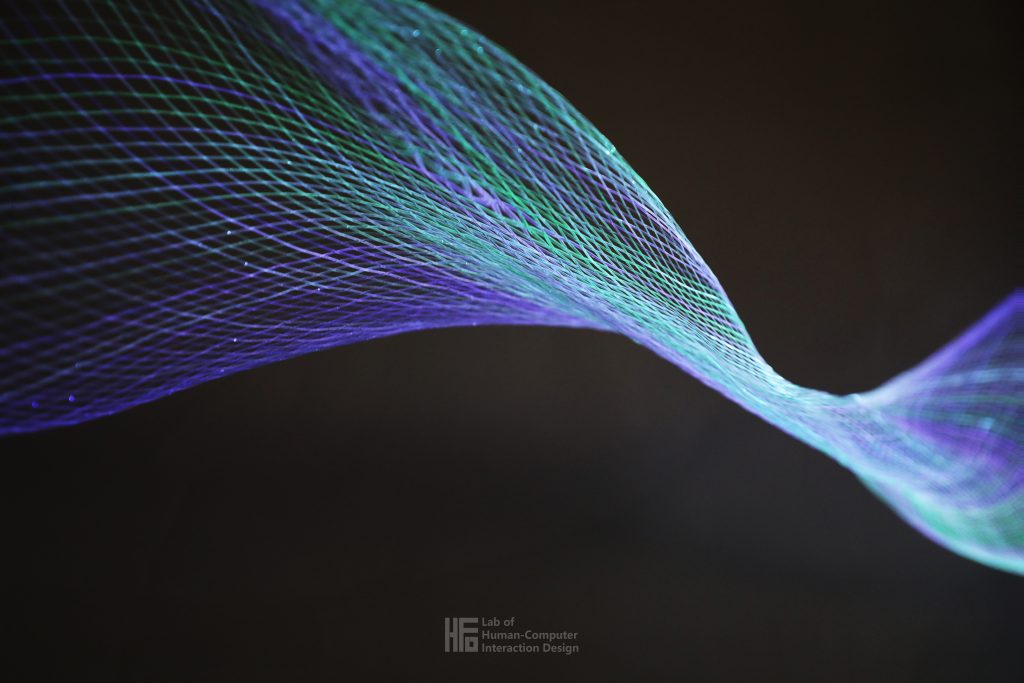
Based on an exploration of material art, the design team chose fiber optics as the material, which serves as a medium for light transmission, making the intangible nature of light seemingly "within reach." Additionally, through physical deformations, the interplay of light between compact and loose configurations creates overlapping patterns, presenting soft and captivating visual scenes.
The organic curved forms can symbolize the highs and lows of a personal journey, the intimacy and distance in relationships, or even the rise and fall of a city. Moreover, the subtle gradient of colors resembles the rhythm of breathing, encouraging viewers to reflect on life more deeply.
The design team hopes that viewers, through their interaction with LIGHTracer, will awaken a sense of self, experiencing the continuous flow of life through the transformations of the fiber optics, thereby evoking a soothing sensation.
To achieve the desired effect, the design underwent multiple iterations. The initial concept featured a ceiling-mounted design sketched during the early stages. Ultimately, based on the core functionality of the interactive installation and its spatial positioning, the team decided on a design combining a fiber-optic network with projection. The projection is cast onto the ceiling, encouraging viewers to look upward while interacting with the fiber optics, creating a unique feeling of being immersed within the light itself.
During the exhibition setup, the team engaged in a second round of creative development. They designed the overall layout with a fiber-optic installation radiating from the center outward. When viewers stand at the center of the fiber-optic structure, the ceiling patterns dynamically generate light contours in response to their interactions with the fiber-optic installation. This interaction aims to evoke an awareness of self in the viewers, inspiring reflections on life.
The breathing gradient of the fiber-optic installation gently guides their thoughts, symbolizing the journey from life's lows to its peaks, and ultimately returning to a serene sense of continuous renewal.