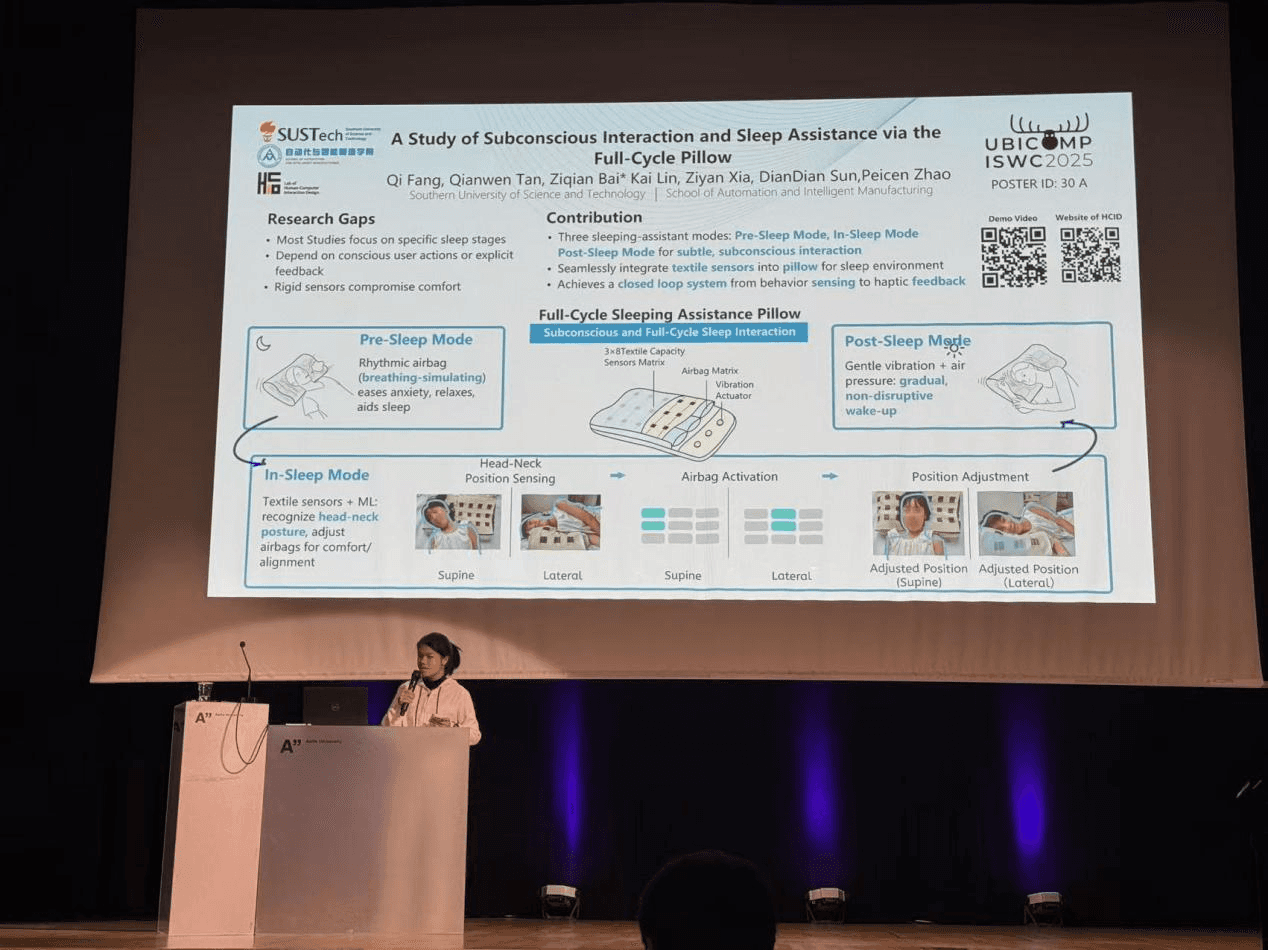
From October 12 to 16, 2025, the HCID team led by Professor Bai Ziqian from the School of Automation and Intelligent Manufacturing at Southern University of Science and Technology attended the Ubicomp/ISWC conference at Aalto University in Finland. The team presented their research on textile sensing and sleep, focusing on the core concept of "intelligent whole-cycle sleep monitoring and intervention under subconscious interaction," which attracted significant attention among the presented achievements .
Research Background and Contributions
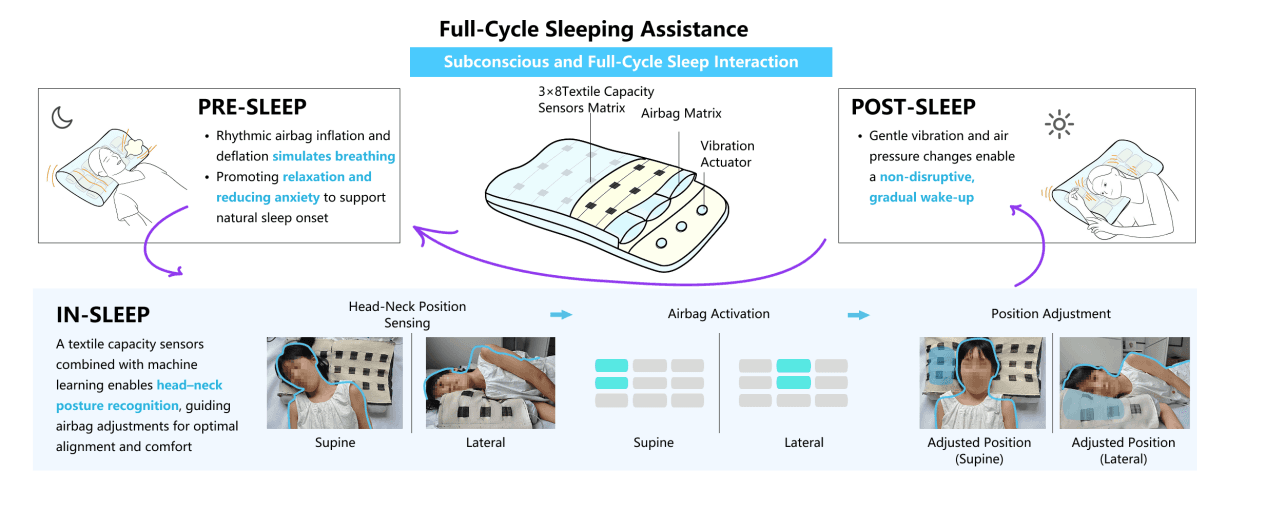
Traditional sleep monitoring and intervention methods often depend on complex wearable devices, which can disrupt the user's sleep experience due to physical discomfort and a sense of intrusion. Furthermore, most existing solutions focus on specific sleep stages, rely on explicit user operations or feedback, and struggle to provide seamless, full-cycle, and unobtrusive sleep care. In response, our team has innovatively proposed three sleep-assistance modes—"PRE-SLEEP, IN-SLEEP, and POST-SLEEP." By utilizing the pillow, an everyday object, as an interactive medium, textile sensors and interactive airbags are seamlessly integrated. This system enables subtle, subconscious interactions across various stages—before sleep, during sleep, and upon waking—to deliver comprehensive sleep intervention. This approach pioneers a natural and humanized pathway in the field of sleep assistance .
Interaction Prototype Design and Workflow
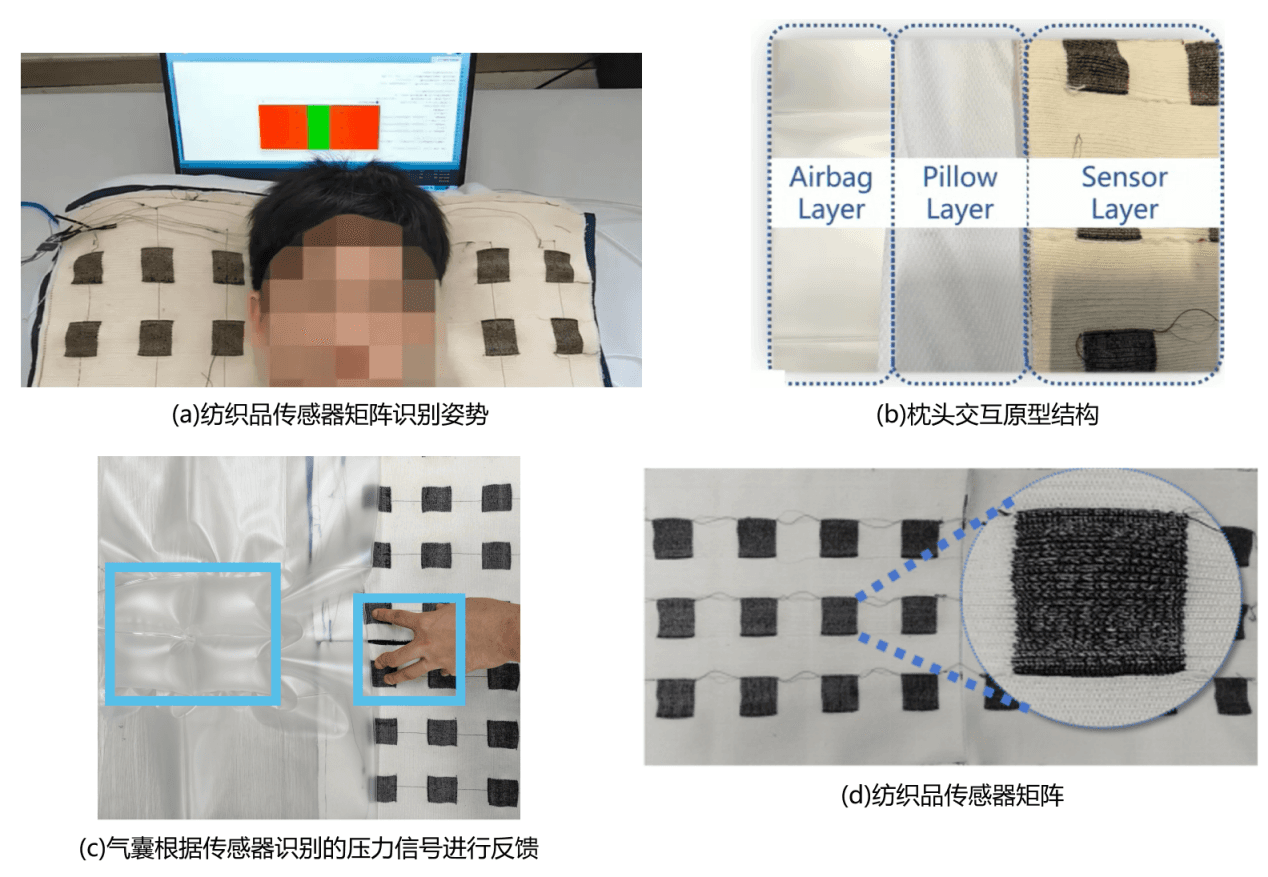
The pillow interaction prototype comprises a multi-layer composite structure, which includes a textile sensing matrix layer, a TPU airbag layer, and a micro-vibrator layer. The overall interaction workflow is as follows :
Before Sleep: The airbags inflate and deflate rhythmically to simulate breathing patterns. At this stage, this can help users focus on their breathing, relaxing both body and mind.
During Sleep: Capacitive textile sensors capture head and neck postures. A machine learning-trained model identifies and classifies postures that may lead to health issues like neck stiffness, numbness, or a stiff neck, then coordinates with the airbags for dynamic adjustments to prevent such problems.
Upon Waking: Gentle vibrations combined with rhythmic movements of the airbags achieve a non-disruptive awakening. Throughout the entire process, subtle, subconscious interactions strike a balance between improving sleep quality and preserving comfort.
In developing the "subconscious sleep interaction system using the pillow as a medium," the team also created a companion sleep health app. Users can set their daily sleep and wake time preferences. The app automatically activates the pillow's sleep-assist mode before the scheduled sleep time and initiates the wake-up mode at the desired waking time. It also records and visualizes the user's sleep posture report for the night, generating relevant sleep suggestions .
Fig. 1 Hardware Structure Diagram
Fig. 2 Interactive Flowchart
User Research Findings
This study collected feedback from six users on the use of the software and hardware prototype through semi-structured interviews. The feedback is summarized as follows: While the core software functions were well received, users suggested optimizing schedule management, improving the logic of data visualization, and enriching sleep-related educational content. Future iterations will further integrate large language models to enable greater personalization and automation. The airbag's breathing simulation for sleep assistance was positively acknowledged, though some users recommended adding soft background music before sleep. The team will use this feedback to guide the evolution of both software and hardware toward a "more natural, intelligent, and considerate" direction, thereby fostering innovation in sleep assistance.
Conference Exchange Gains
During the "Poster Madness" 30-second quick-talk session, the team members conveyed the core value of their research with concise and refined expressions, quickly capturing the audience's attention. In the subsequent conference exchange periods, they engaged in in-depth discussions with researchers from Tsinghua University, Tongji University, the University of Tokyo, Stanford University, and other institutions around the concept of "full-cycle subconscious pillow interaction." These exchanges not only sparked new perspectives for innovative exploration in the field of sleep assistance but also yielded many highly constructive research suggestions. These included incorporating additional dimensions of physiological signal monitoring, optimizing the precise identification mechanism for sleep and wake stages, and further refining the quantitative identification methods for sleep quality. These insights have provided important directions for the subsequent deepening of the research.
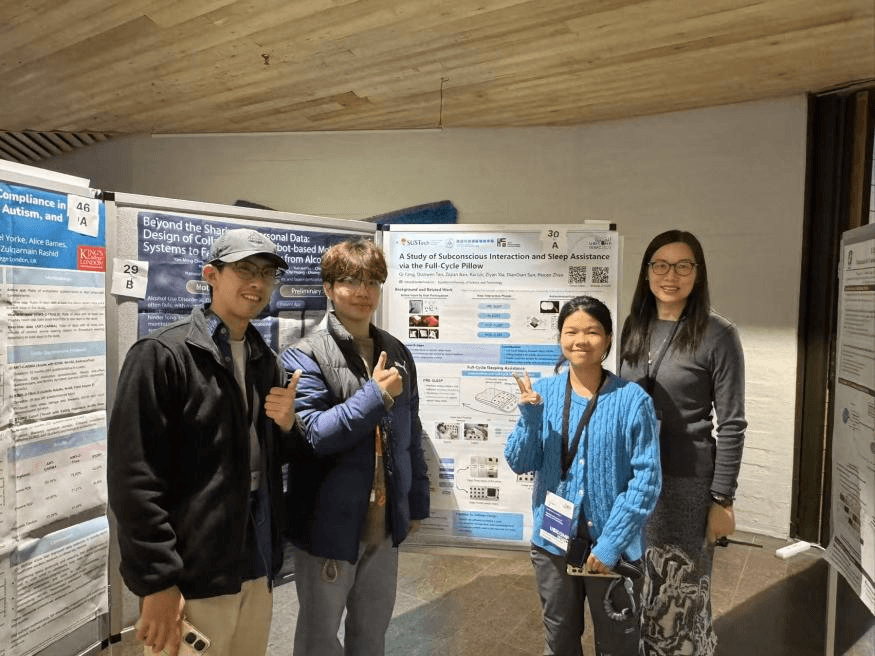
Fig. 3 Team Photo
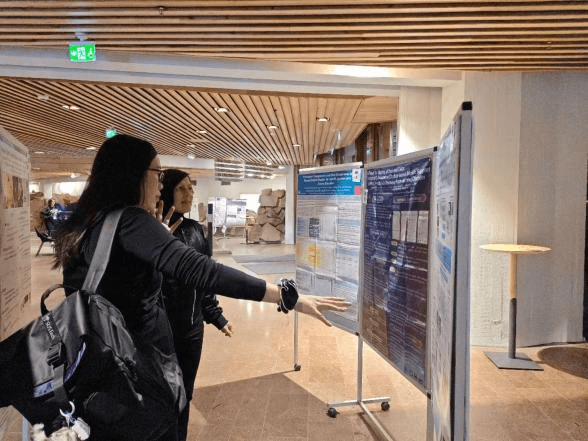
Fig. 4 Team members' communication with other research scholars
Fig. 5 Poster Presentation